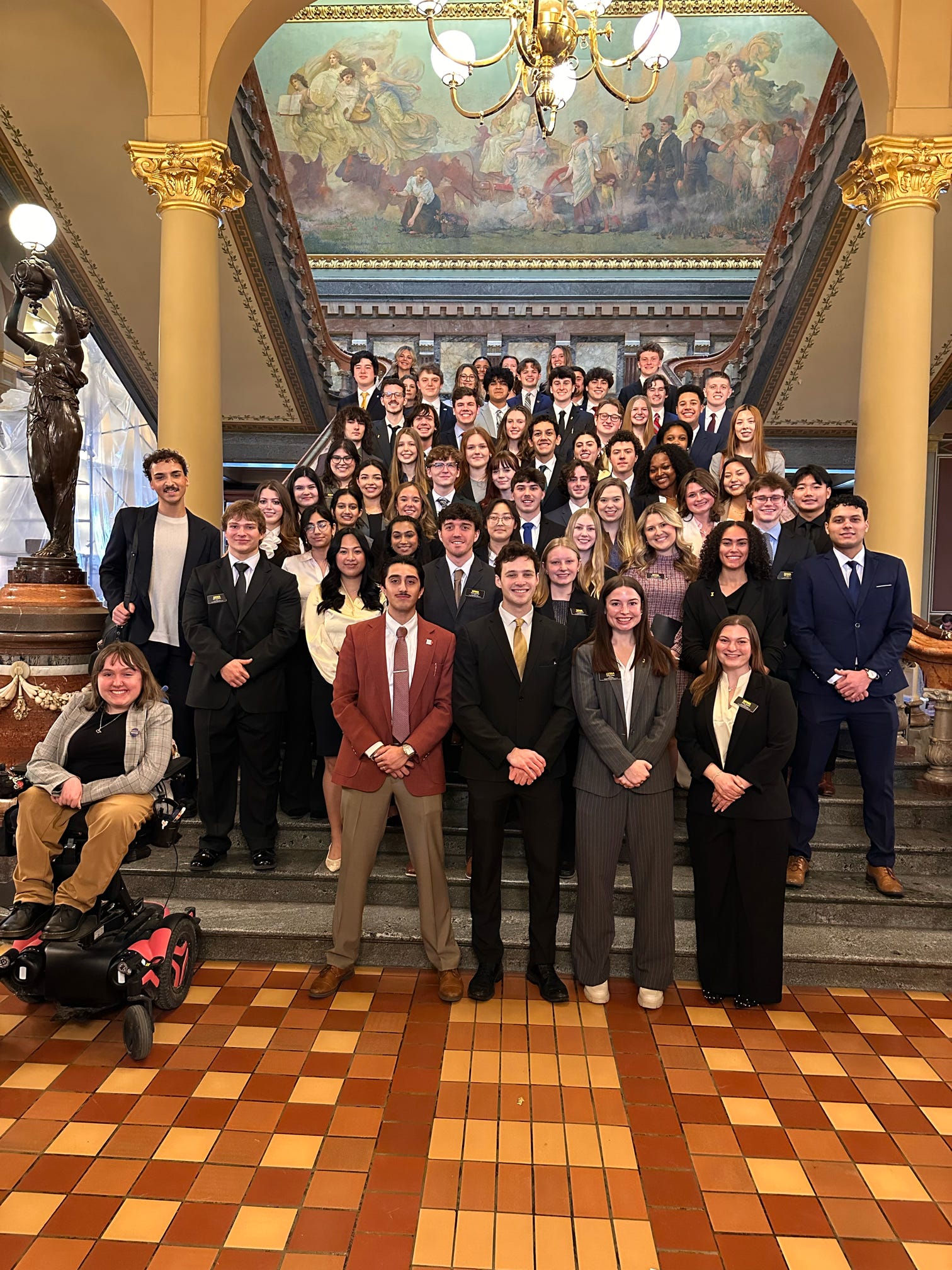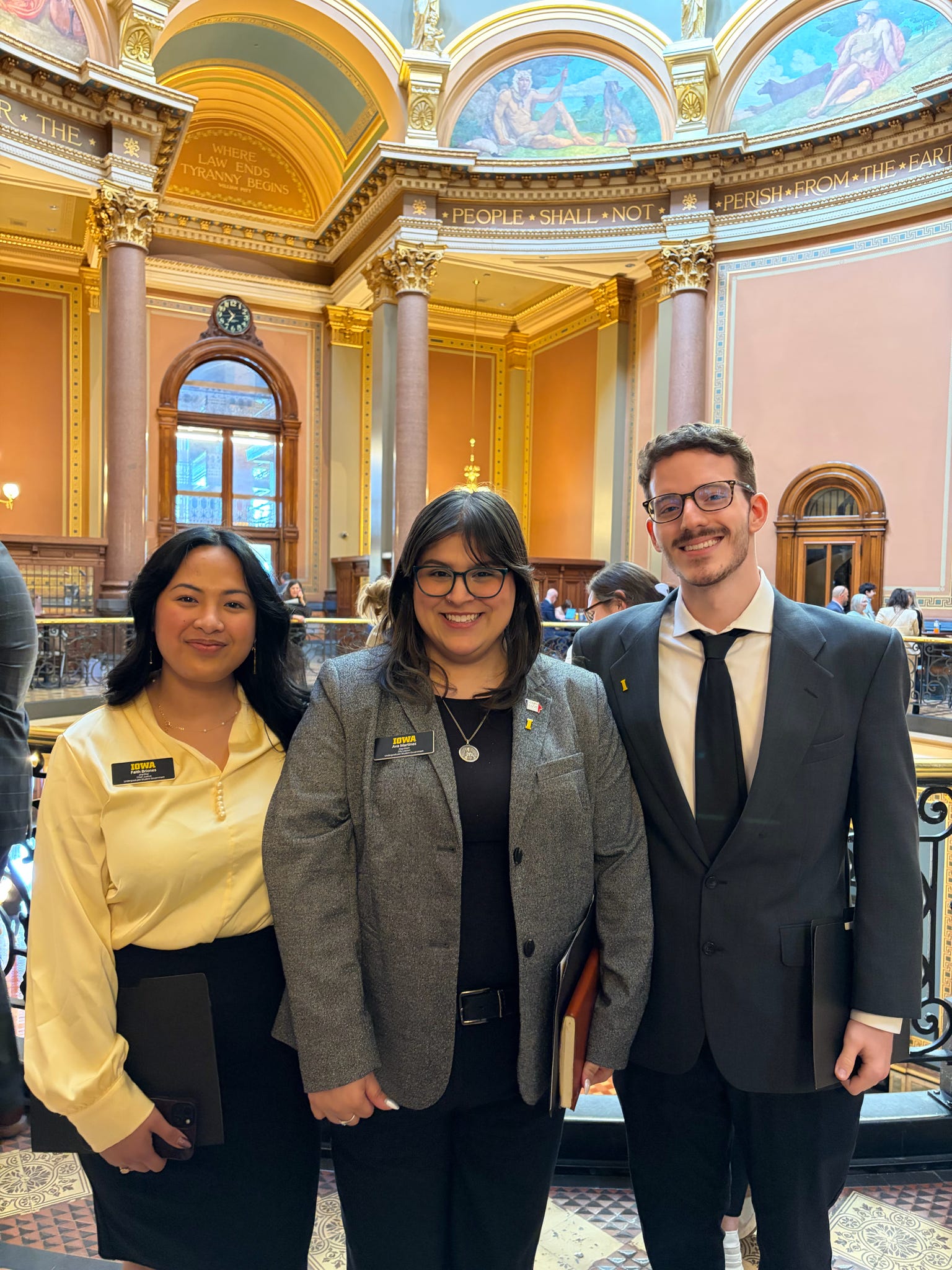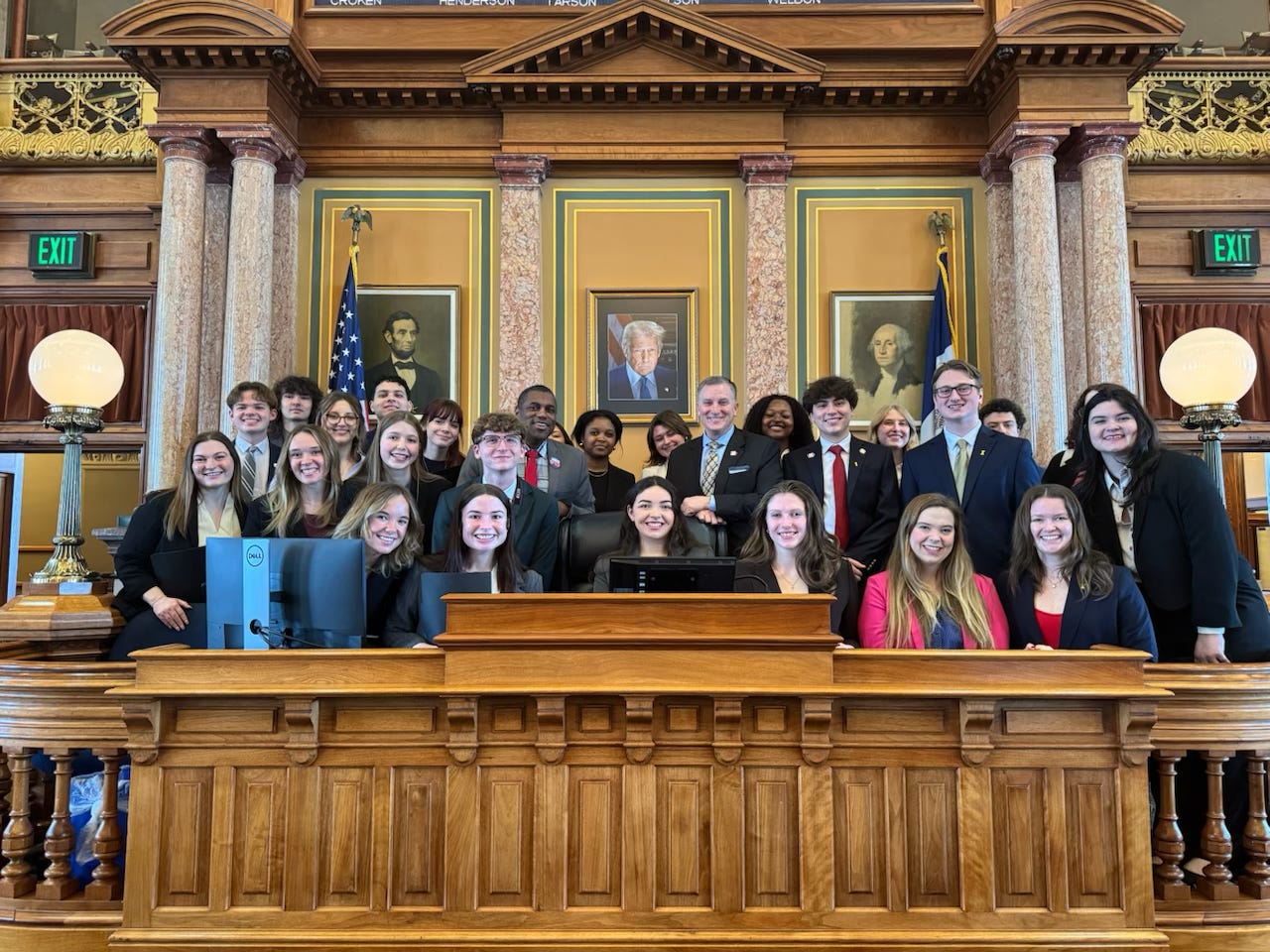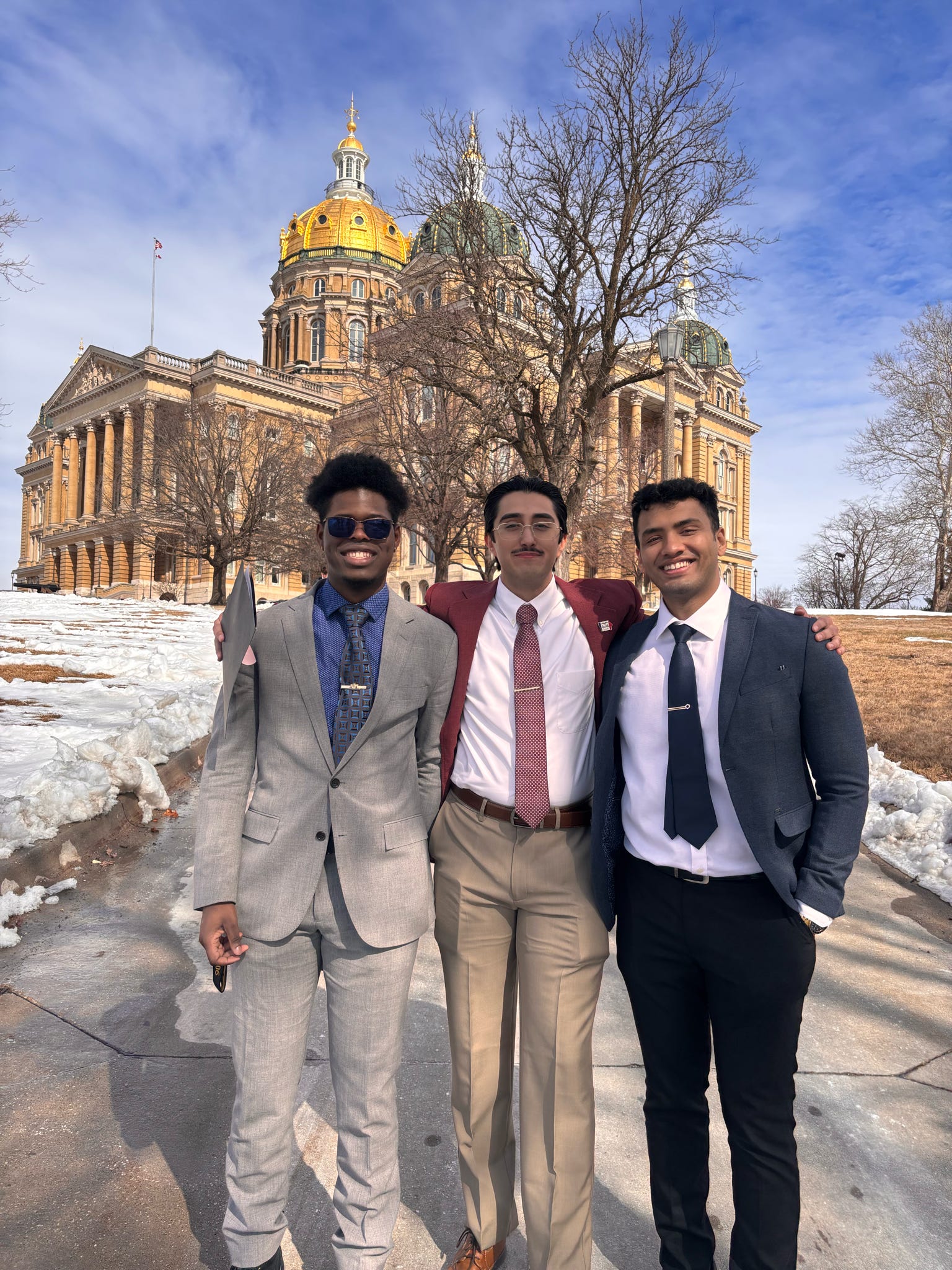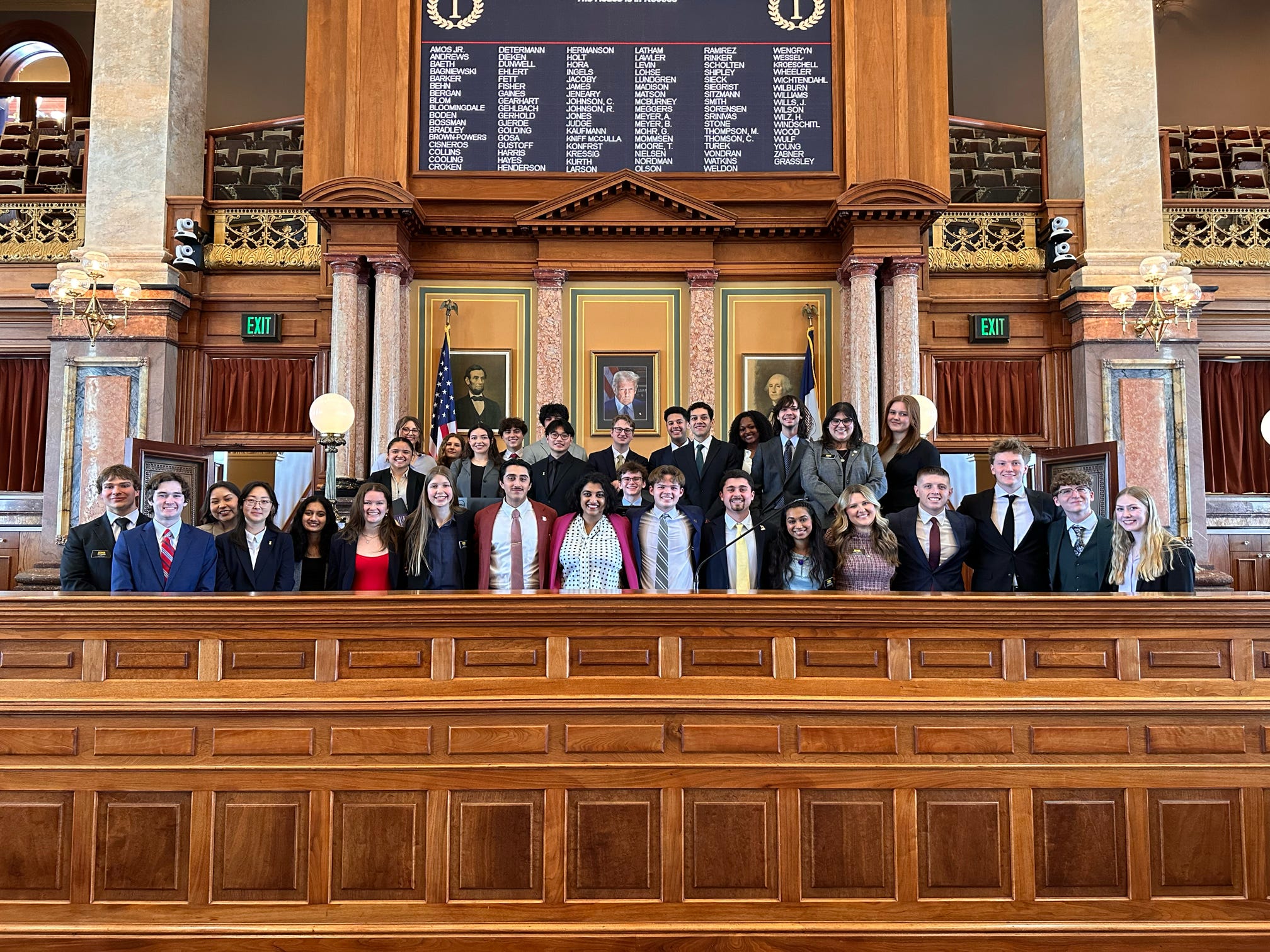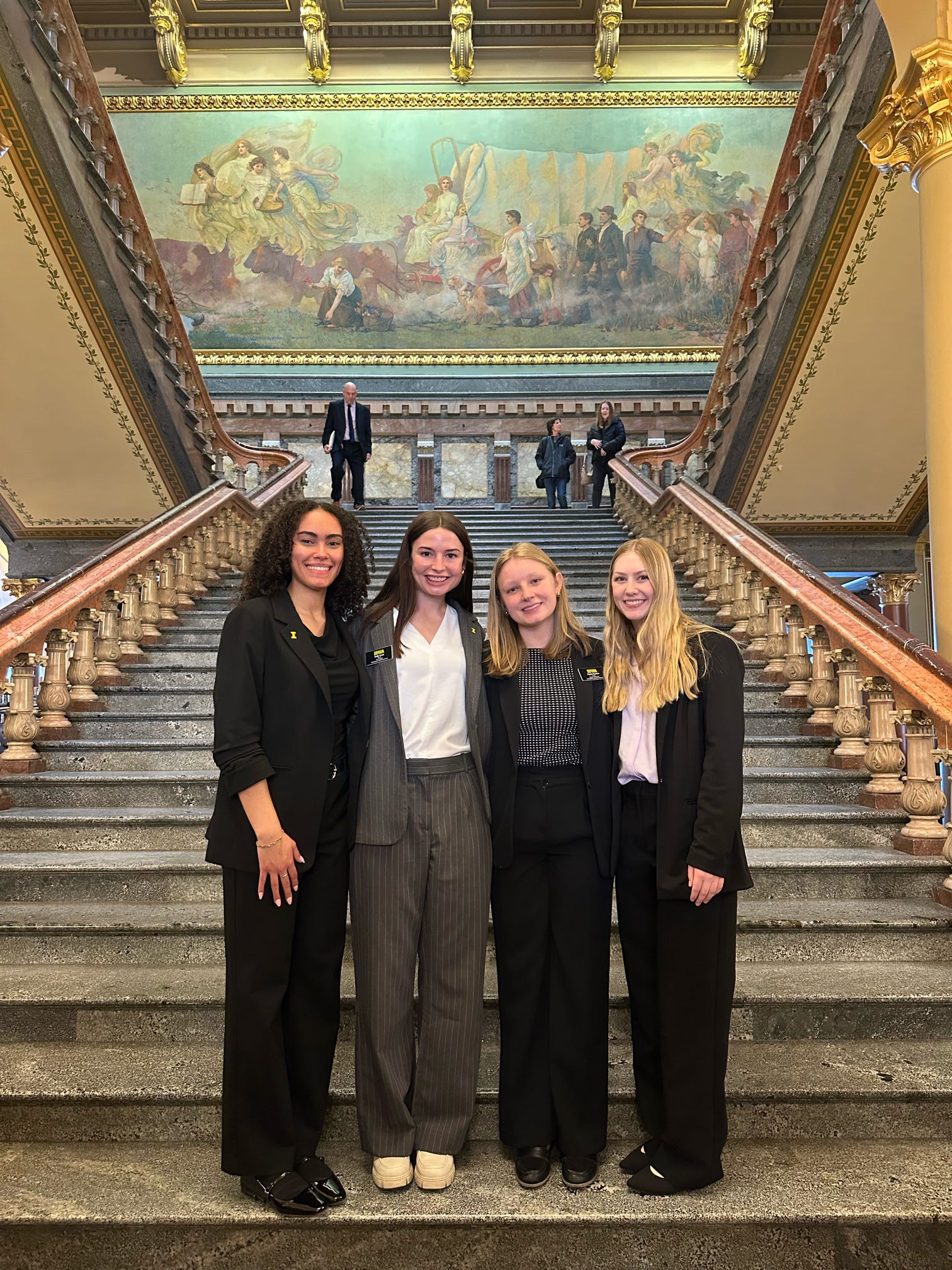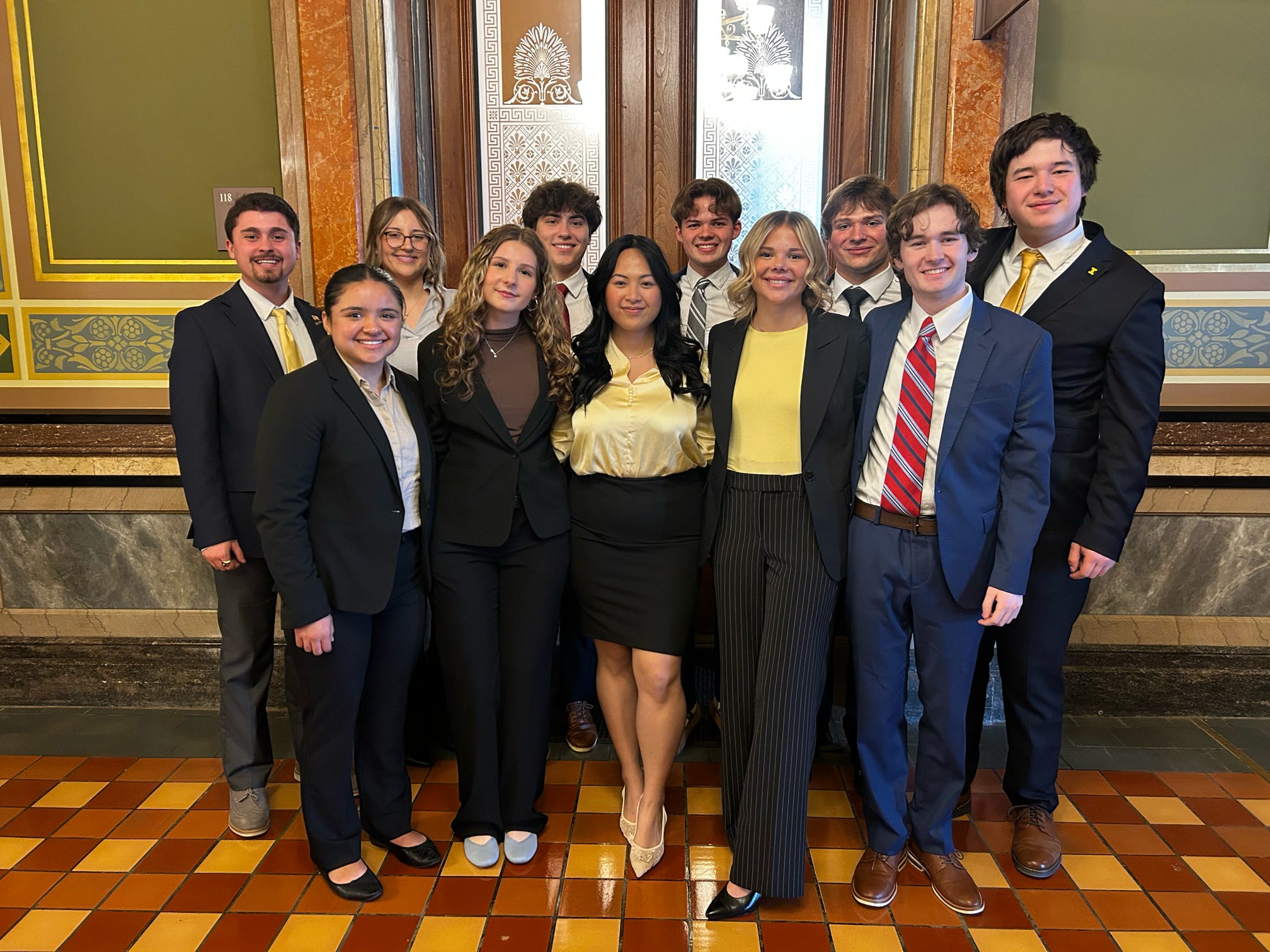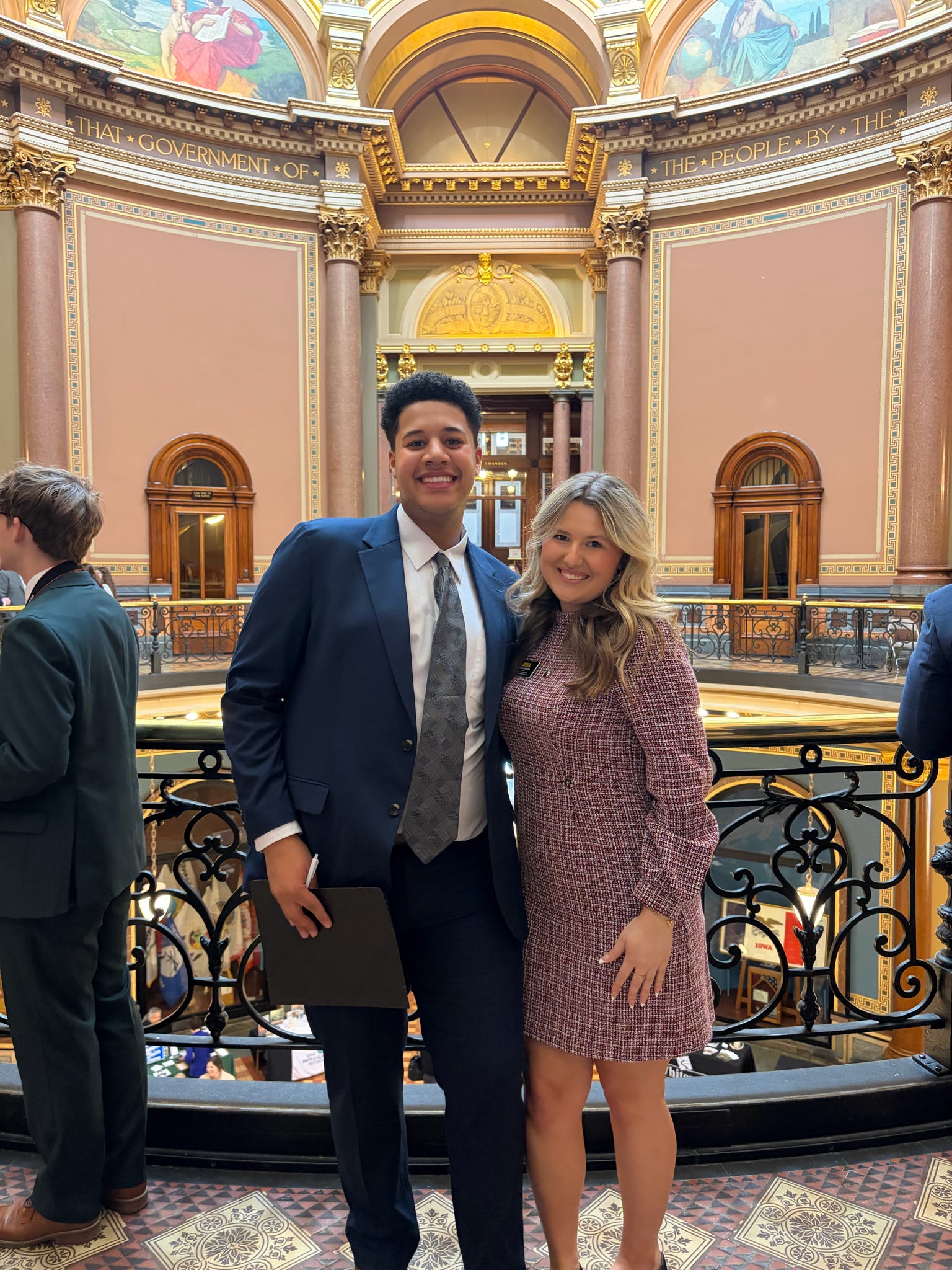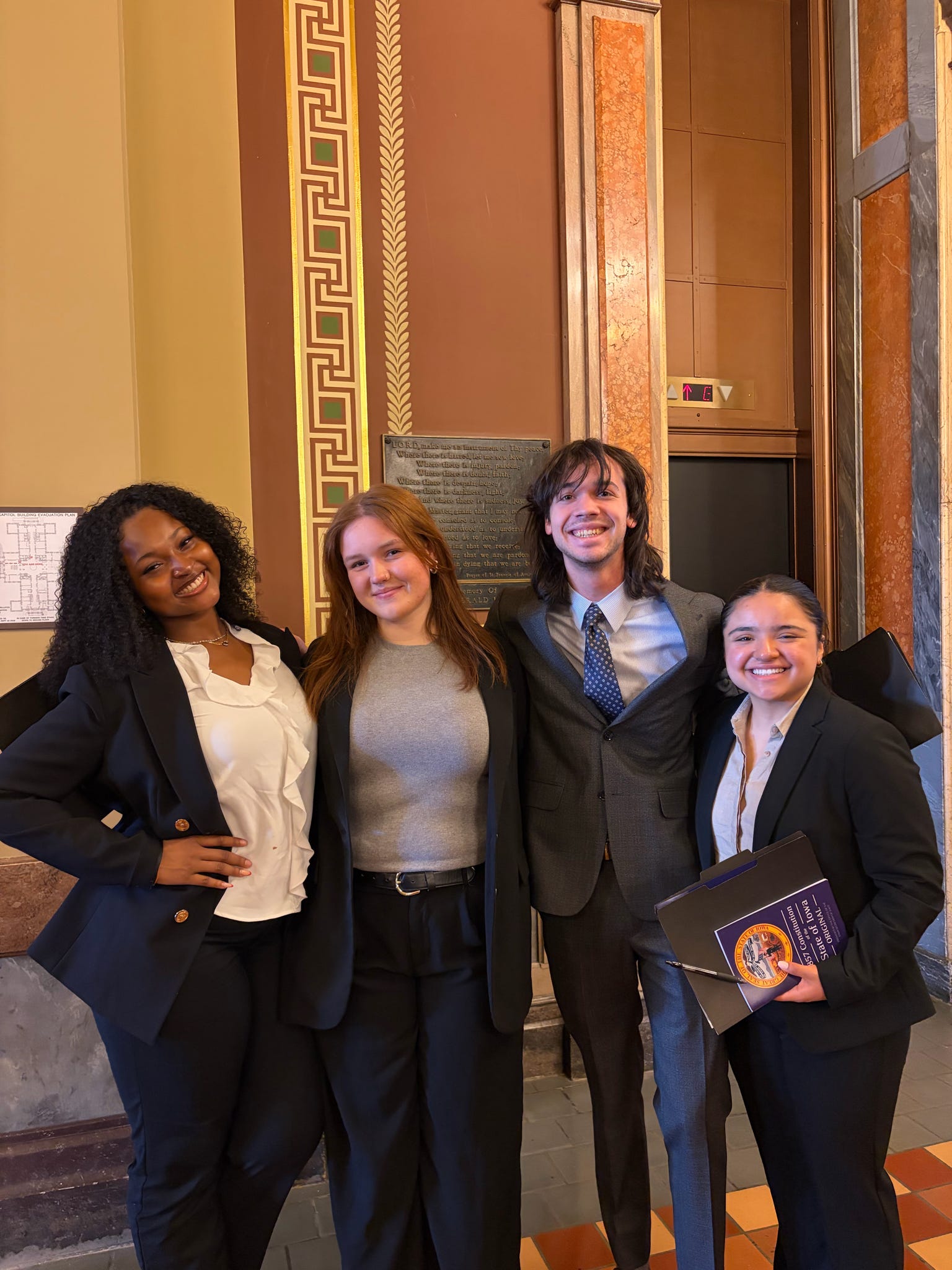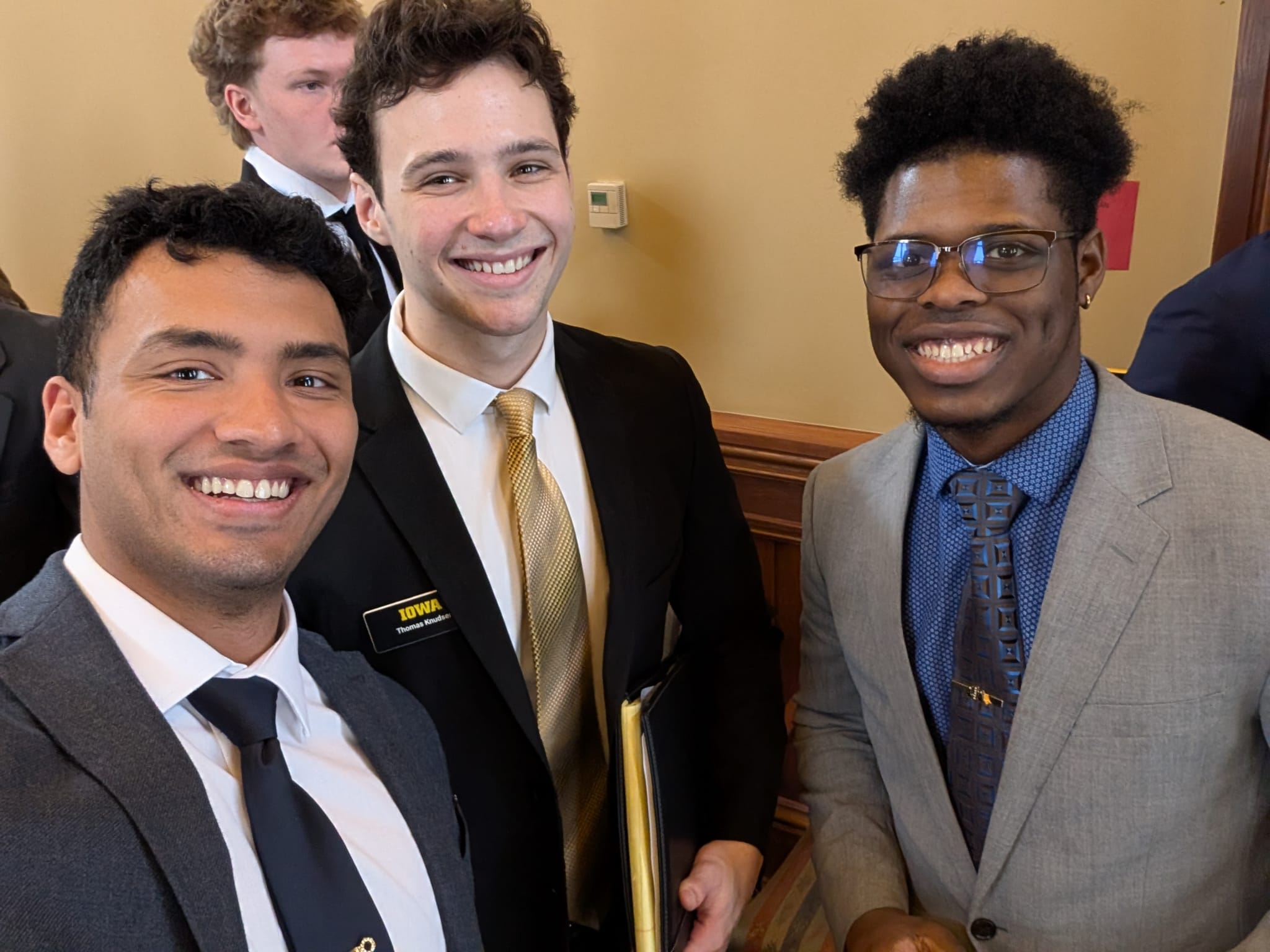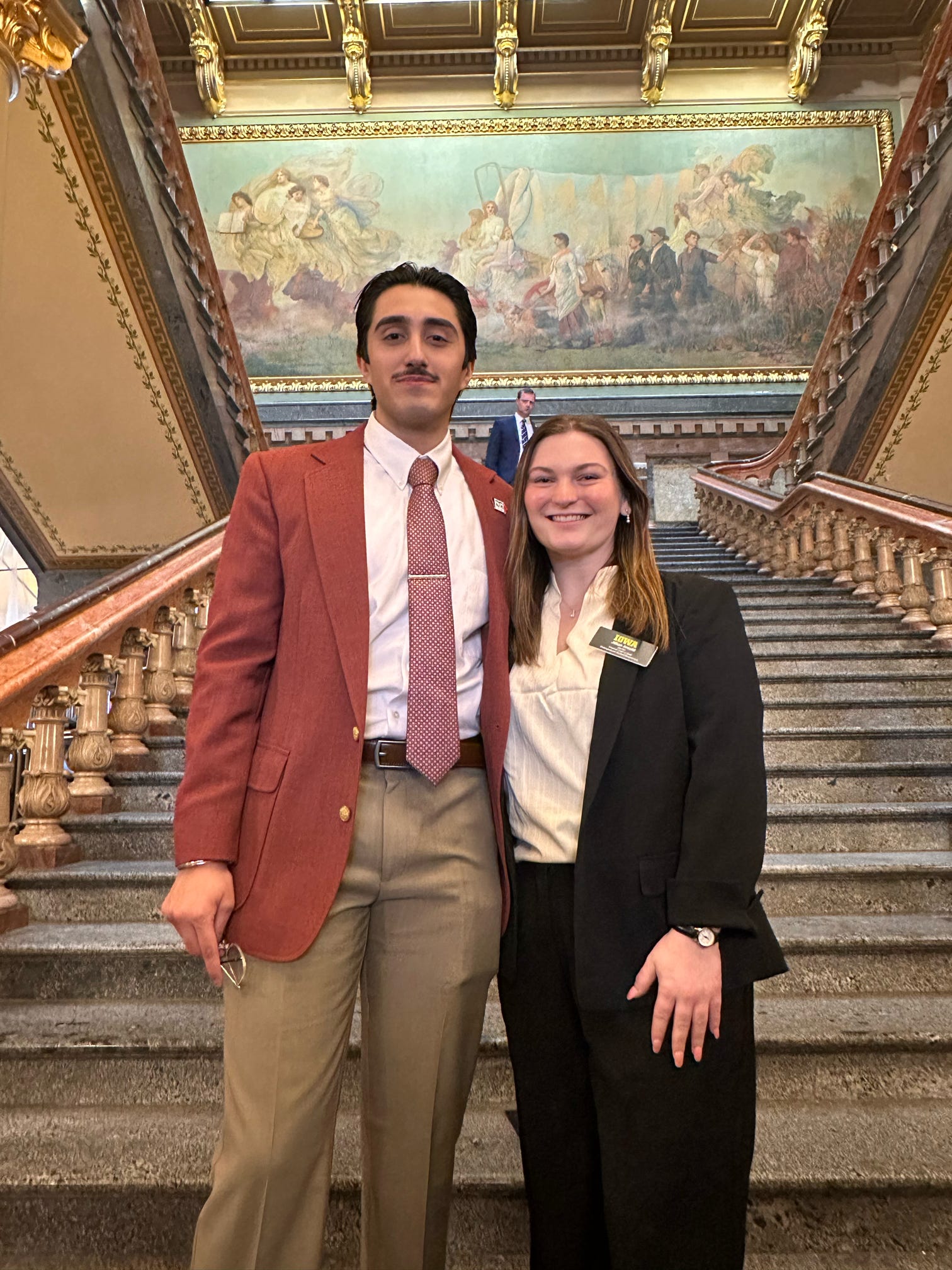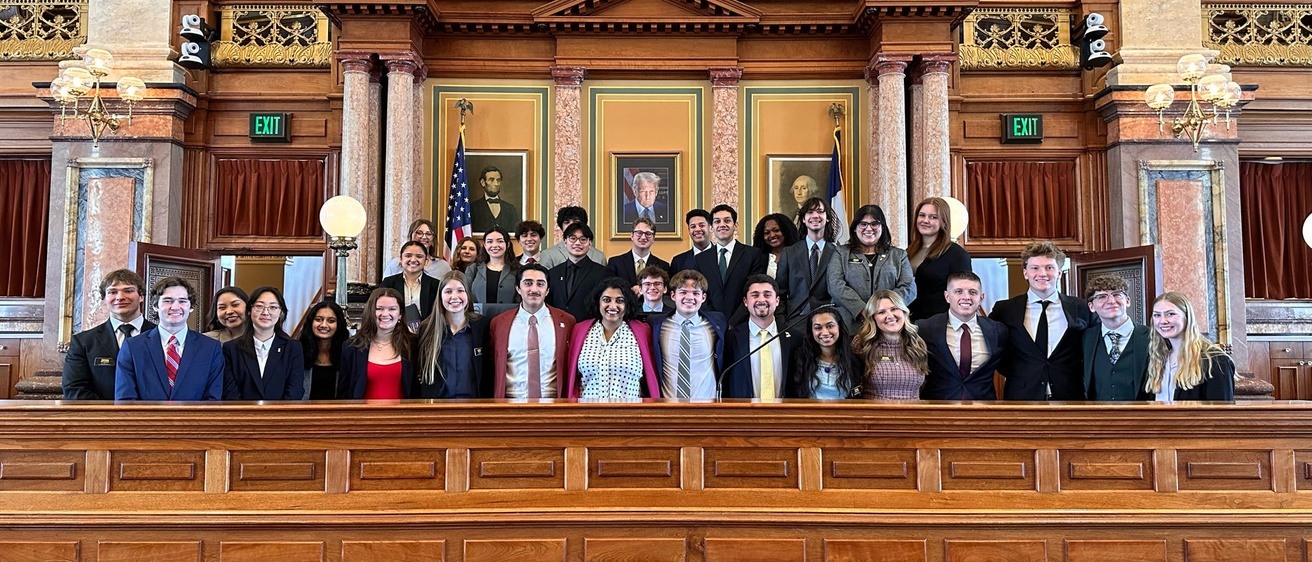
The Undergraduate Student Government traveled to the Iowa State Capitol on Wednesday, Feb. 25 for its annual USG Caucus Day, meeting with 15 elected officials to advocate on behalf of University of Iowa students.
Throughout the day, senators, executives and justices met with legislators to discuss USG’s 2026 legislative priorities. Key advocacy points included opposing mandatory civic education course requirements (HF 2361 & SF 2232), opposing the removal of the student voting regent (HSB 534), and increasing mental health investment across Iowa’s three Regent institutions.
In collaboration with student governments at Iowa State University and the University of Northern Iowa, USG supported a joint proposal calling for a $1 million investment in mental health resources across the three Regent universities. Of that total, $419,000 would be allocated to the University of Iowa. The proposal includes funding for embedded counseling services, additional doctoral interns, staff retention and expanded campus-wide mental health programming.
Kartik Kalra, director of governmental relations, said Caucus Day provided an opportunity for students to move beyond written priorities and engage in meaningful, face-to-face conversations with lawmakers.
“Conversations moved beyond policy points and into shared experiences and personal stories,” Kalra said. “It was a powerful day of leadership, collaboration and student voices in action.”
For many senators, the experience reflected months of preparation and advocacy. Governmental Relations Senator Grant Gehring described attending his first Caucus Day as “a rewarding experience” and “the culmination of all the work we put in to prepare and advance the interests of students at the University of Iowa.” He added that he hopes legislators walked away with a stronger understanding of USG’s student-focused priorities.
USG leaders emphasized that Caucus Day remains one of the organization’s most significant advocacy efforts each year, ensuring that student perspectives are present in state-level conversations that directly impact their education and campus experience.